
How to Keep Your Dog Entertained: Enrichment Ideas for Dogs Post-Surgery
My darling little cavvy, Florence, full of all the energy and inquisitiveness of a puppy, had a rough start to her life. To add to the usual challenges of raising a puppy, this poor little girl underwent four surgeries in under twelve months! She had to recover from two dental surgeries, an eye surgery and abdominal surgery. She got quite used to the "cone of shame"! Thankfully, she seems to bounce back well from anaesthetics, but this proved to be a challenge in terms of keeping her happy and mentally stimulated, while still sticking to the vet's post-surgery instructions. We had some fun adventures and there was a big learning curve getting to know her and how much/ what types of mental enrichment she needed. Here, I share some of the ideas I learned on my journey with my own dog, as well as some I've learned through my years of vet nursing.

Post Anaesthesia Care.
The first couple of days post anaesthesia, your dog won't need a lot in terms of enrichment. Rest is in fact the name of the game as they process all the anaesthetic drugs and recover from surgery. When you first get your dog home from the vets, the best thing for them is to have a warm, quiet, cosy place to rest. Make them comfortable and let them rest. Some dogs can feel quite nauseous after an anaesthetic, so food should be given in small amounts to start with. This is not the time for puzzle toys and training games. Encourage rest and hold off on all the entertainment ideas for as long as your dog needs.
Dental surgery.
Restrictions: soft foods only, no chewing.
I didn't realise until after we had dental surgery, how much I rely on using chews and hard foods/treats to keep my dog entertained! A long-lasting chew treat was something I gave my dog almost daily! Most of the puzzle toys I had worked best with kibble or hard treats.
Here are some of my best ideas for post dental surgery:
Water Play.
I set up a little paddling pool and we were able to paw and bite at splashing and the trickling hose. Treat bobbing with softer treats is also entertaining if your dog doesn't mind putting their head in the water. If you have a swimmer, lucky you, as swimming can keep them happy for ages!
My dog enjoys playing in the shower - licking the water off the floor, walls, my legs and the dripping water off an arm/elbow etc. We made this game last as long as we could each night, often with several members of the family.
Bubbles is another good idea - blowing bubbles with a dog safe soap and letting them catch them.
Lickimats.
These are a great idea for any recovery, but especially when soft foods are needed. These mats are designed for using soft foods. There are plenty of ideas of things to put on your lickmats, but my dogs favourites are raw whisked egg and dine cat treats. I also love these for encouraging quiet time for dogs.
Eye surgery.
Restrictions: Large Elizabethan collar on at all times, no face rubbing.
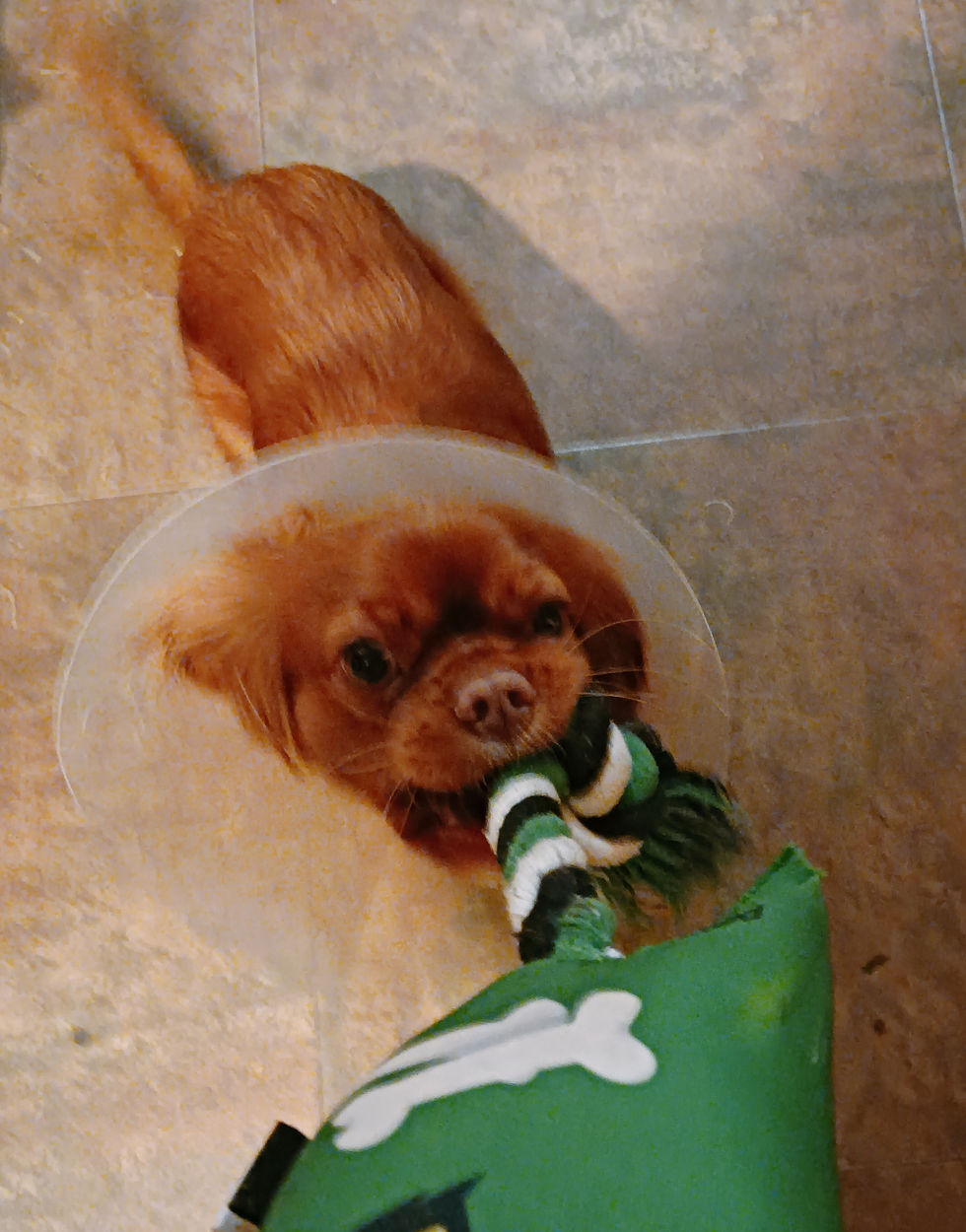
The large Elizabethan collar I needed to use at all times after my dogs eye surgery was very restrictive! I did try to take it off a couple of times, but she immediately tried rubbing at her eye and could not be distracted. I also initially tried the softer blow up style collars, but again she could rub at her eye with those so we weren't able to use them. So we had two weeks of a big hard cone on her head 24/7. Good fun at night when she's trying to cuddle up near your face!
Here's my best ideas for dogs needing large cones on 24/7:
Elevate bowls, lickimats, and chew treats. It's quite tricky to get your nose to something when you have a big hard cone on! Even just trying to pick up a treat off the floor is almost impossible. So I used an elevated cat feeder to feed my dog - the cone needs to fit around the outside of the bowl. I was able to stick a lickimat here too. Then I figured out how to stick a chew treat in so it would hold the chew still for her while she had a chew, as she couldn't hold the treat with her paws and chew as she normally would. For larger dogs, you could try to stick the feeder on a wall/fridge door etc so the dog doesn't have to bend down to get to it.
A game of tug. While she couldn't pick up a ball or small toys off the ground easily, if I held the toy/tug/cardboard roll, she was able to grab it easier to play. Her favourite tug toy handmade by Wild Hair https://www.facebook.com/wildhairtugs?mibextid=ZbWKwL
Walks were allowed after she had recovered from the anaesthetic, but were definitely a bit trickier with a big cone on her head. We had to walk, not run. Stopping for a sniff was also a little harder for her, but I found she managed well as long as I didn't rush her. Playing with other dogs was a big no in this case, but I found most people very understanding when they saw the cone on her head. We did go to the dog park this time, as we are lucky enough to have a park with a section for "quiet dogs/don't want to play dogs".
Abdominal surgery.
Restrictions: No jumping, restricted exercise in general, no swimming/bathing, Elizabethan collar or post surgical vest on almost all the time.
I found using the surgical vest rather than the Elizabethan collar was much less restrictive in terms of things we could do. However we did switch it around sometimes, as the drawback of the vest was that she couldn't toilet without me folding it back for her, then folding it back in place after she had gone.
Training.
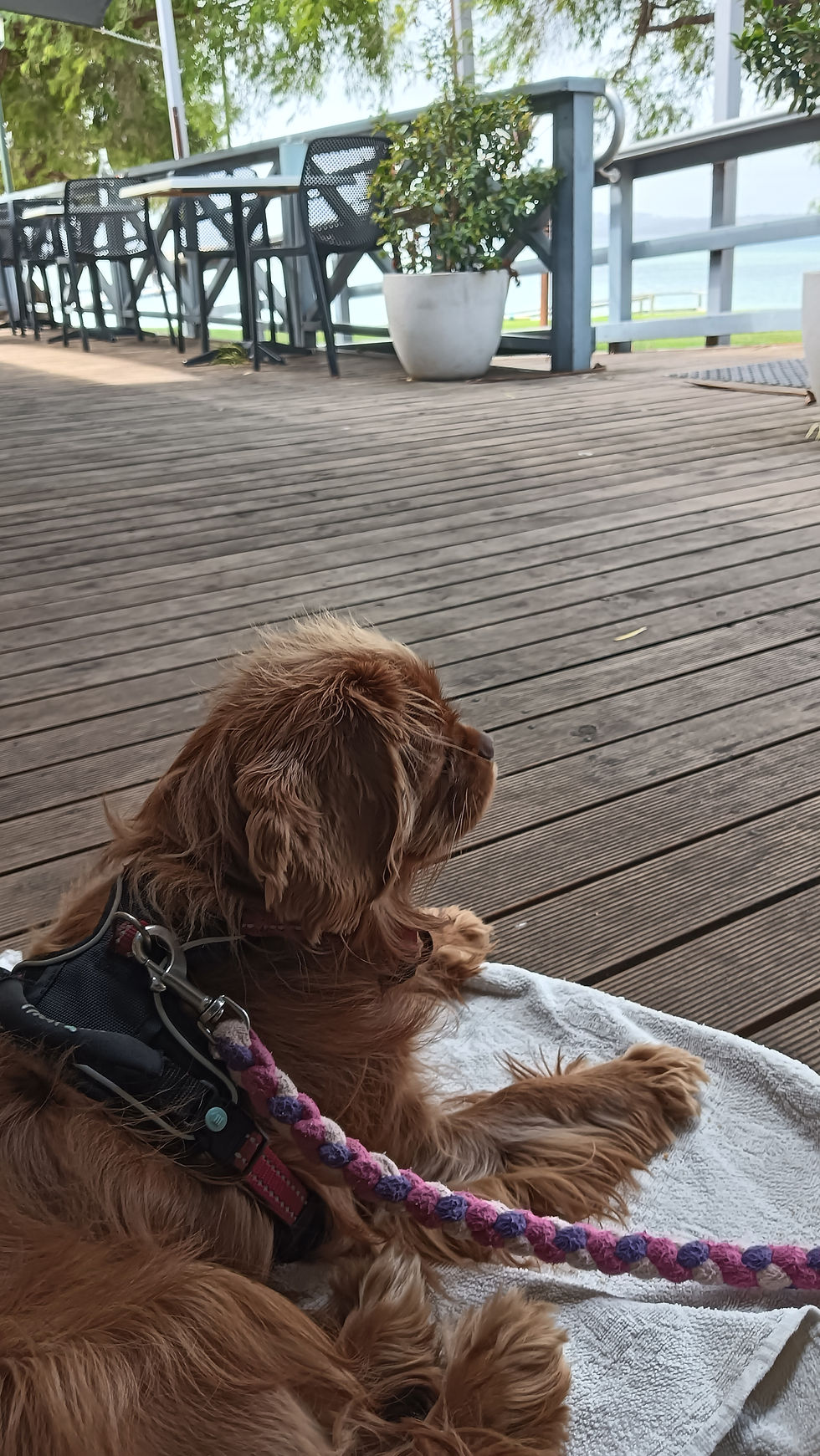
You could use this time to train some simple commands that don't involve running/jumping/stretching. The mental work of training is often as tiring as a long walk (arguably more tiring). "On your mat/bed" is a great one to practise during recovery time. Take a mat to the park/cafe/beach once they are good at sitting on it at home and practice in different environments. I had fun working on some cooperative care tricks with my dog, like getting her to accept teeth cleaning and holding paws for nail trims.
Car rides.
Exercise restrictions mean no long walks or running around the yard enjoying chasy games. A car ride, with the window down enough to let the smells in, gives them the chance to get the noses twitching. You can park somewhere interesting and just watch the world go by. If you have somewhere nice to hop out and sit for a picnic, your dog might like to just sit in the sun with you and perhaps a slow on-lead sniff. If you have kids, the school run is always a fun car ride. We happened to be in the middle of whale season when my dog was recovering from her spey, so I often took her for a car ride up to the lookout where we would get out and she could have a good sniff of ocean air while I sat looking for whales. She really wasn't very excited when I found them, but she did enjoy the sniffs and pats/interaction with other people at the lookout! You could take your dog to the vet clinic for a happy visit - ask the staff when a good time would be and see if they can give treats and pats as a positive association with the vet clinic after what was most likely a not so fun experience.
Other surgeries
Of course, there are different surgeries that your dog may have had with different restrictions. Hopefully the ideas here can give you at least a starting point, then you can get a little creative from there. There are also many more ideas you can find with a quick google search. Remember that following your vet's instructions are paramount and more important than any enrichment games or activities. The instructions are given for a reason - to help your dog recover without any complications (which then extends recovery time). We need to keep in mind the end goal of getting better and only engage in activities that do not compromise your dog's recovery. If in doubt, speak to your vet.
Best wishes for your dog's recovery!

Comments